
Swapnil Sharma, Flower Mound Realtor: The Truth About Becoming a Real Estate Agent
By Shaune Corbett·
Swapnil Sharma, Flower Mound Realtor: The Truth About Becoming a Real Estate Agent
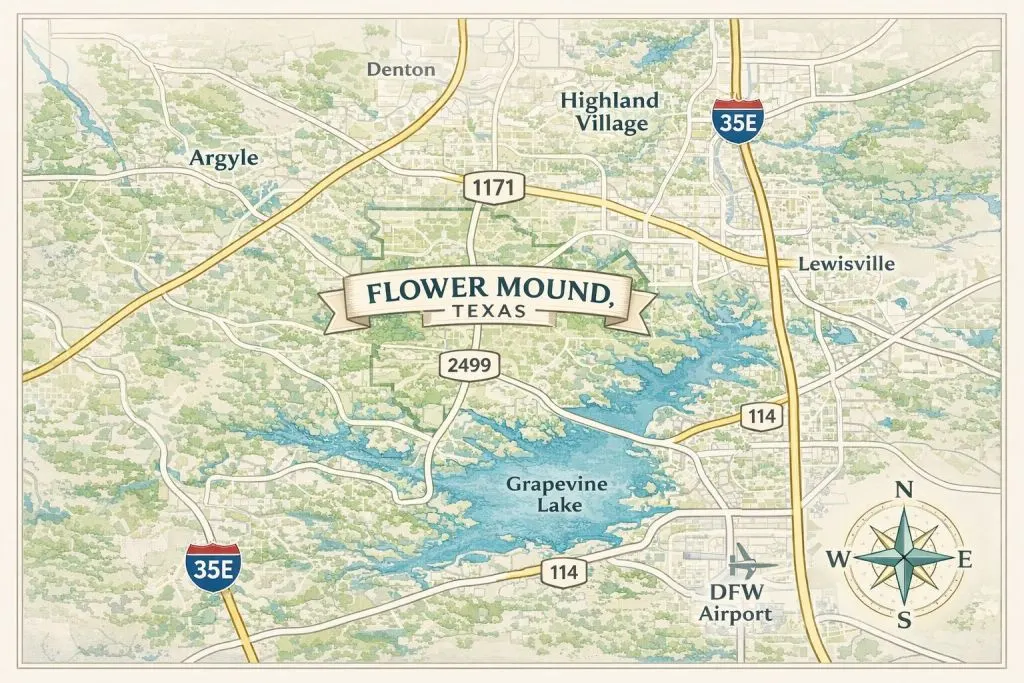
Swapnil Sharma didn’t plan to be in real estate. She applied for a job as an agent’s assistant, got rejected, then got the job anyway—and 17 years later, she’s a Compass team lead in Flower Mound running one of the most relationship-driven practices in the DFW market. As a Flower Mound real estate expert and leader of The Sharma Group DFW, she has built a reputation for client-first service and systematic excellence.
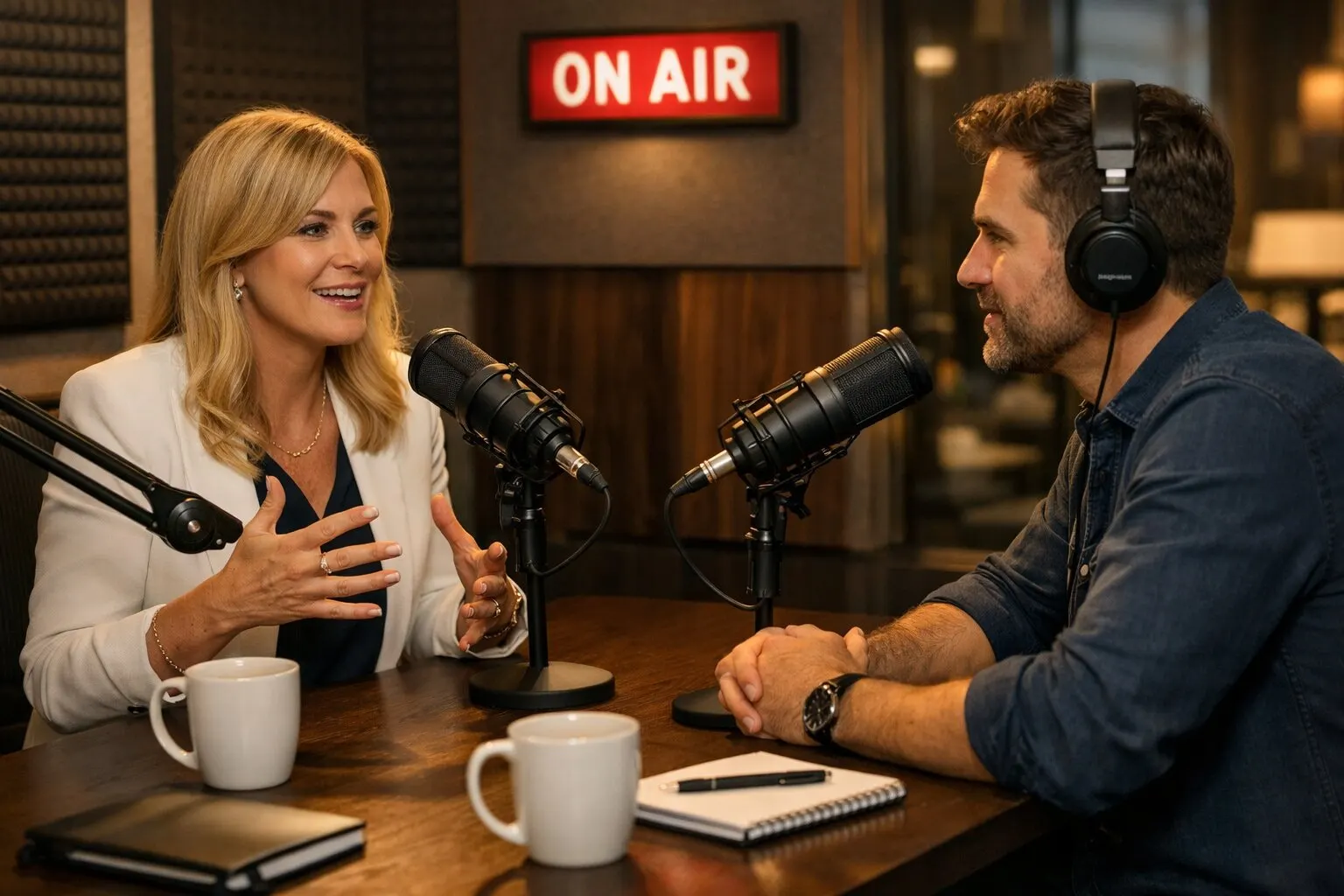
I sat down with Swapnil at her Flower Mound office for an episode of Real Estate Success DFW to unpack what it actually takes to build a sustainable career in residential real estate—not the highlight reel, not the Netflix version, the real version.
Who Is Swapnil Sharma?
I knew Swapnil Sharma by reputation before we ever recorded together. She sells a ton of real estate in our local market—and I don’t say that casually. We were both invited to a real estate panel with three other top-producing agents earlier this year, and what struck me was how different her approach was from everyone else’s. I was all over the place, freethinking and unorthodox. Swapnil had a plan, a system, and a reason behind every answer.
She’s a residential real estate expert based in Flower Mound, Texas, with 17 years in the DFW market. She leads a growing team at Compass Real Estate and specializes in new construction advisory, design-driven buyer guidance, and relationship-based client strategy.
She completed all the coursework for a broker’s license but never took the exam—because she’d rather spend that time serving clients than collecting letters after her name. I respect that.
Real Estate Is Not Easy — It’s a Small Business
I asked Swapnil what she tells people who call her asking about getting into the business. She didn’t sugarcoat it.
“If you want to be an agent, make sure that you are doing it knowing it’s not an easy job. It’s like we are running our small business every day. Unless you are built with thick skin, it’s not the place to be. You have to handle rejections. You have to literally drop everything and go meet with a client because sometimes they want to see a home right now.” — Swapnil Sharma
That’s the part nobody talks about on the recruiting calls. Real estate doesn’t operate on your schedule—it operates on the client’s. The agent who can’t pick up the phone at 7 PM on a Saturday loses the showing to the one who can.
And in a 2026 market where mortgage rates are still hovering in the mid-6s and buyer activity is picking up in pockets of DFW, the agents who show up fastest and most prepared are the ones winning business.
Is real estate a good career in 2026? Absolutely—but only if you’re willing to run it like the small business it actually is. For those just starting, the National Association of Realtors offers extensive resources and research to help new agents understand the landscape they’re entering.
The Myth of Flexibility in Real Estate
Swapnil got into real estate for the same reason a lot of people do: flexibility. And then she actually started doing the job.
She applied for a job as an agent’s assistant, got rejected initially, then got the offer. Once she started learning the business, the things she didn’t understand bothered her—so she kept going to classes until she had her own license by 2009. The flexibility that lured her in? Gone. She quickly realized real estate is not a flexible job—it’s a 24/7 commitment.
Yes, you set your own schedule. But your schedule is dictated by clients, showings, inspections, appraisals, deadlines, and closings. You work weekends. You work evenings. You work holidays when a buyer panics about their rate lock expiring.
Understanding the legal and ethical framework from day one is critical. The Texas Real Estate Commission (TREC) sets the standards for practice and licensure in our state, and new agents should become very familiar with their guidelines to build a sustainable, compliant business from the ground up.
⚠️ Reality Check: What “Flexibility” Actually Means
- You choose which 60–70 hours of the week you work
- Clients expect same-day responsiveness
- The market doesn’t pause for your vacation
- Income stops the moment you stop working
- The agents who treat it like a side hustle get side-hustle results
Swapnil learned this early, and it shaped everything about how she built her practice: around systems, a team, and a relentless commitment to being available when her clients need her—not when it’s convenient.
This is why it’s important to learn from the stories of other agents on how they built their practice and succeeded.
Why Residential Real Estate Is Her Calling
Swapnil does commercial deals occasionally when clients need them, but her heart is in residential. And she explained why in a way that reframes how agents should think about their role.
“Residential is more emotional. It’s my calling. I love giving advice to buyers and sellers so they can make informed decisions. We don’t have a crystal ball, but we have a knowledge base of so many transactions that helps our sellers and buyers.” — Swapnil Sharma
Commercial is calculated. Residential is personal. And the agents who thrive in residential are the ones who embrace the emotional complexity instead of running from it. Swapnil’s 17 years of experience don’t just give her market knowledge—they give her the emotional intelligence in real estate to guide clients through fear, excitement, doubt, and decisions that will shape their families’ lives for decades. That’s a different skill than running comps.
Why AI Will Never Replace Real Estate Agents
I asked Swapnil point-blank: When is AI going to replace us? Her answer was immediate and definitive.
“AI cannot replace the human aspect of it. You are looking at something in person. You are smelling, you are touching things, you are feeling things. Real estate is not two plus two equals four. There is improvisation. There are emotions. There are so many ifs and buts. It’s very hard to create a formula for real estate.” — Swapnil Sharma
And here’s the part that stuck with me: she actually tested it. She asked AI questions in areas where she already knew the correct answers—and the AI got them wrong. She uses it for small projects and quick research, but she’s not outsourcing judgment to a chatbot. In a market like DFW, where every neighborhood has its own micro-dynamics—Flower Mound is different from Southlake, which is different from Frisco. So can AI replace real estate agents? Not anytime soon.
The tool is useful. The tool is not a replacement. Real estate transactions involve sensory evaluation, emotional navigation, improvisation under pressure, and judgment calls that no algorithm can replicate. The day AI can walk through a house, smell the mold behind the drywall, read the seller’s body language during a negotiation, and comfort a first-time buyer having a panic attack—that’s the day agents become obsolete. We’re not there yet.
Experience Creates Confidence in Transactions
This is something I feel strongly about, so I want to give it the space it deserves. When you’ve done enough transactions, you start seeing patterns. I told Swapnil that in my experience, once we get past the option period, I’m about 95% sure we’re going to close. That’s not blind optimism—it’s pattern recognition.
You know when the lender’s not giving you warm signals. You know when the inspector is creating headaches that could kill the deal. You start reading the situation before it deteriorates.
Swapnil feels the same way. After 17 years and hundreds of transactions, she can identify where a deal is going to face friction before it arrives—and address it proactively. That’s what buyers and sellers are really paying for. Not the MLS access. Not the lockbox code. The ability to see around corners.
📊 What Experience Teaches You to Anticipate
- Where the deal will face negotiation pressure
- Which lenders communicate well (and which create problems)
- What inspection items will trigger buyer anxiety
- How to price to attract offers without leaving money on the table
- When a client’s emotions are overriding their judgment
New Construction Expertise Creates Separation

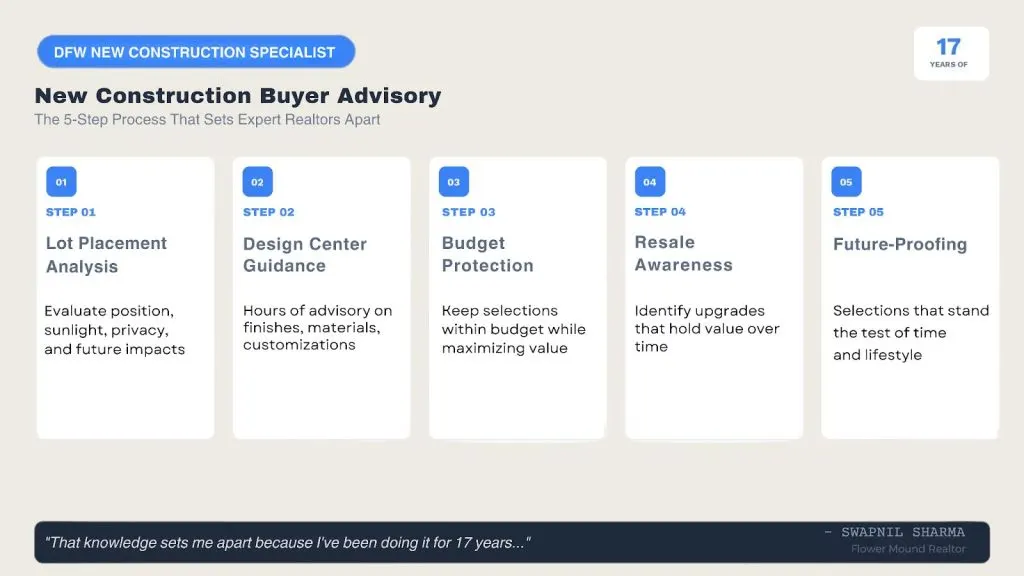
This is where Swapnil really separates herself from the pack. Most agents treat new construction like a formality: drive the client to the model home, let the builder’s rep handle it, and collect the check. Swapnil’s in the design center for hours, side by side with her clients. As a DFW new construction specialist, she brings a level of expertise that most agents simply don’t offer.
“When I started, my first few transactions were new builds. I made sure I was going to design centers with my clients. Helping them understand what will look good, what won’t, and keeping their budget in mind. There are so many hours in a design center. That knowledge sets me apart because I’ve been doing it for 17 years.” — Swapnil Sharma
She advises on finishes, lot placement, budget allocation, and—this is the part most agents skip—resale impact. She knows which upgrades hold value and which are emotional splurges that won’t return a dollar when it’s time to sell. One of her clients even joked that Swapnil was building her own house—that’s how invested she gets.
New construction real estate expertise like this doesn’t come from a weekend certification. It comes from 17 years of doing the work that other agents don’t bother with.
Future Pacing Protects Buyers from Short-Term Decisions
One of the most valuable habits Swapnil has—and one of the least common—is future pacing every single purchase. Before a client writes an offer, she walks them through what happens in three, five, and seven years. Not to scare them. To protect them. Understanding how to future pace buyers is a skill that separates advisory agents from transactional ones.
- You’re buying in a school district that may not support future appreciation—are you aware of that?
- You only have three bedrooms, but plan to have more kids. You’ll outgrow this in three years.
- What’s your exit strategy if you need to sell in two years? Will this home hold value?
In today’s DFW market—where inventory in communities like Flower Mound, Prosper, and Celina is shifting week to week—this kind of forward thinking is more important than ever. Buyers are making decisions with rates in the mid-6s, and the ones who plan for refinancing opportunities later are in much better shape than the ones reacting to today’s payment shock. Swapnil makes sure her clients think long-term, even when the urgency feels short-term.
Design Knowledge Builds Authority
Swapnil stays current by following top interior designers across the United States—not scrolling TikTok for mood boards, but studying the professionals who set direction for the industry. And she uses that knowledge differently depending on who she’s working with.
Design Advisory: Investor Client vs. Luxury / Owner-Occupant
<table class=“has-fixed-layout”><tbody><tr><td><strong>💰 Investor Client</strong></td><td><strong>🏠 Luxury / Owner-Occupant</strong></td></tr><tr><td>Keep finishes neutral and cost-effective</td><td>Select finishes that match personal lifestyle</td></tr><tr><td>Maximize appeal to the broadest buyer pool</td><td>Prioritize quality materials and custom details</td></tr><tr><td>Budget drives every decision</td><td>Budget matters, but daily experience matters more</td></tr><tr><td>ROI is the only metric</td><td>Resale value + enjoyment both factor in</td></tr><tr><td>Trend-proof selections (timeless neutrals)</td><td>Current design trends with personal expression</td></tr></tbody></table>
That flexibility—knowing when to advise for ROI and when to advise for lifestyle—is what turns a showing agent into a trusted advisor. And it’s a skill you build over years of sitting in design centers, not from watching renovation shows.
Social Media Matters — But Phone Calls Close Deals
Swapnil has a large social media following—partly through her own consistency, partly through her sister, a 600,000-follower influencer in India. But she’s refreshingly honest about what social media actually does versus what agents think it does. The debate around phone calls vs social media in real estate is one she’s thought deeply about.
“Social media marketing is not easy. You have to dedicate time, energy, planning, and execution. But nothing can replace picking up the phone and calling your clients. Put some soul and energy into what you post. Give value to the client. Don’t just celebrate yourself.” — Swapnil Sharma
What Builds Brand vs. What Closes Deals
<table class=“has-fixed-layout”><tbody><tr><td><strong>📱 Social Media</strong></td><td><strong>📞 Phone Calls</strong></td></tr><tr><td>Keeps you visible and top of mind</td><td>Creates a real two-way conversation</td></tr><tr><td>Builds brand awareness over time</td><td>Builds trust and a relationship immediately</td></tr><tr><td>Attracts new followers to your content</td><td>Converts existing contacts into active clients</td></tr><tr><td>Shows you’re relevant and active</td><td>Surfaces hidden referrals and timeline shifts</td></tr><tr><td>Works passively in the background</td><td>Works the moment you pick up the phone</td></tr></tbody></table>
Her advice: post consistently and give real value. But if you’ve got 30 minutes, call your top 50 contacts instead of editing a Reel. I completely agree. I’ve been a broker since 2008, flipped over a hundred homes in this market, and it’s the conversations, not the content, that have built my business. Phone calls surface opportunities an algorithm will never show you.
Why She Built a Team — And How She Trains New Agents
Swapnil didn’t build a team because she wanted a bigger brand. She built one because she was drowning. Solo agent, two young kids, more leads than she could physically serve. She was missing opportunities to help people, and that bothered her more than any deal she left on the table. Her approach mirrors what other top producers have shared about building a successful real estate career through systems and coaching.
“When I was a solo agent, I was getting too many clients and I had two young kids. I was missing out on helping people. So I created a team because they became my extension. It’s like a gym. If you don’t lift the weights, you won’t see results. You have to put in the energy every day.” — Swapnil Sharma
Her team runs on a structured onboarding system built from real mistakes, not a textbook: a standardized training process covering client communication expectations, transaction workflows, and the emotional realities of residential deals. New agents learn Swapnil’s specific approach—how she wants clients treated, how to handle the unpredictable parts of a deal, and what the non-negotiable standards are.
But she’s clear: the system gives you the playbook, and then you have to execute it. Nobody does the reps for you. Learning how to build a real estate team the right way takes years of refinement.
Thick Skin and Emotional Discipline Win
Swapnil came back to this at the end of our conversation, and it’s worth emphasizing because it’s the single biggest reason agents wash out. This theme of building confidence and success in real estate comes up in nearly every conversation I have with top producers.
“Unless you are built with thick skin, it’s not the place to be. You have to handle rejections. You have to be ready to drop everything for your client. If you are transactional, don’t do it.” — Swapnil Sharma
Rejection in this business isn’t occasional—it’s structural. You lose listings. Buyers ghost you. Offers get rejected. Deals fall apart at the finish line. Clients blame you for market conditions you can’t control. The agents who survive aren’t the ones who avoid the hits. They’re the ones who take them and keep showing up. That’s emotional discipline—and you can’t learn it in a weekend seminar.
Transactional vs. Relationship-Driven Agents
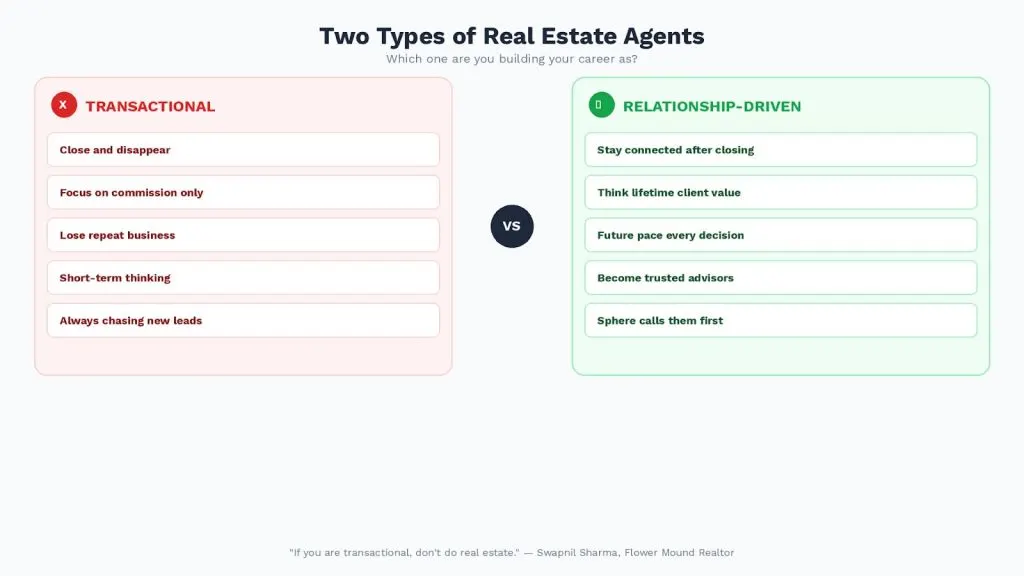
I said it on the show, and I’ll say it here: if you’re transactional, don’t do real estate. We already have enough agents who close the deal and disappear—and their clients never call them again.
Swapnil’s entire practice is built on the opposite philosophy. She stays connected. She future paces. She thinks about lifetime value, not just the closing table. And the result? A sphere of influence that calls her first, every time. That doesn’t happen from slick marketing. It happens because people know she actually cares what happens to them after the transaction closes.
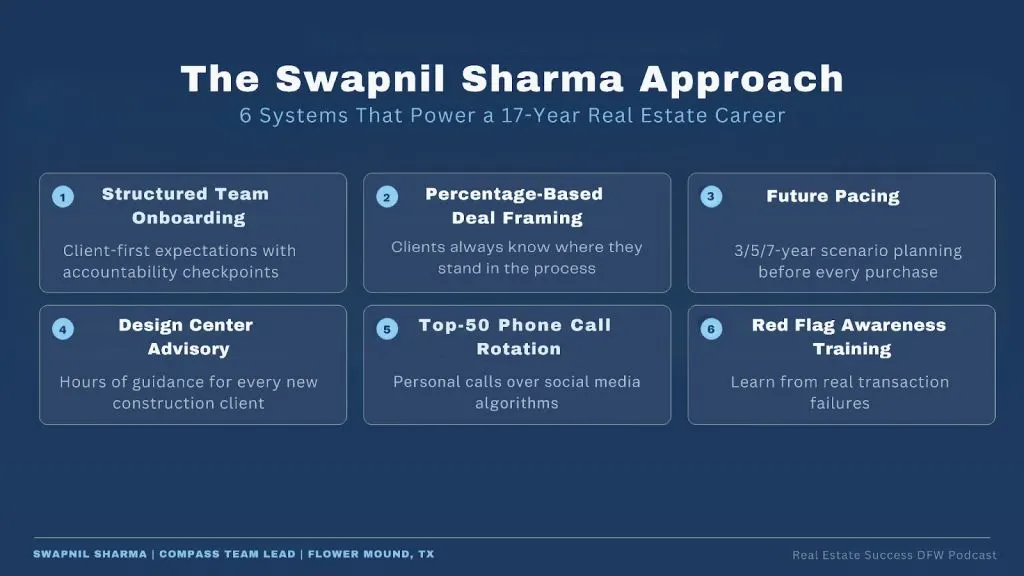
💡 The Swapnil Sharma Approach: What Her Systems Actually Look Like
- Structured team onboarding with client-first expectations and accountability checkpoints
- Percentage-based deal framing so clients always know where they stand
- Future pacing every purchase with 3/5/7-year scenario planning
- Design center advisory sessions for every new construction client
- Top-50 phone call rotation instead of relying on social media alone
- Red flag awareness training for new agents based on real transaction failures
The truth about becoming a real estate agent is that it’s not easy. It’s not flexible. And it’s definitely not what you see on reality TV. But for agents with thick skin and a client-first heart—agents like Swapnil Sharma, Flower Mound Realtor and Compass team lead Flower Mound—it’s a career that rewards the people willing to do the real work. Is real estate a good career in 2026? If you’re reading this and nodding along instead of flinching, the answer is yes.
🎧 Listen to the Full Episode
Catch the full conversation with Swapnil on your favorite platform: YouTube | Spotify | Apple Podcasts
Frequently Asked Questions
1. Who is Swapnil Sharma in Flower Mound?
Swapnil Sharma is a residential real estate expert and Compass team lead in Flower Mound, Texas, with over 17 years of DFW market experience. She specializes in new construction, design advisory, and relationship-based client strategy.
2. Is real estate a good career in 2026?
It can be—if you treat it like a small business, not a side hustle. The DFW market is active, rates are stabilizing, and agents who combine systems with genuine client care are building sustainable practices. But it requires thick skin, emotional discipline, and a willingness to work on your clients’ schedule. For those considering the path, the National Association of Realtors provides a wealth of information on member benefits, industry research, and professional standards that can help set you up for success.
3. Is real estate a flexible career?
Not in the way most people expect. Swapnil entered real estate for flexibility and quickly learned it’s a 24/7 profession. Clients operate on their own timelines, and the agents who succeed are the ones available when it matters—not when it’s convenient.
4. Can AI replace real estate agents?
Swapnil says no—and she tested it. Real estate involves sensory evaluation, emotional navigation, and improvisation that AI cannot replicate. She uses AI as a research tool, but found it gives incorrect answers on questions where she’s knowledgeable.
5. What makes a great residential Realtor?
Thick skin, emotional intelligence, deep market knowledge, client-first service, and the willingness to future pace decisions so buyers don’t make short-term mistakes with long-term consequences.
6. How do you succeed long-term in real estate?
Build relationships, not transactions. Invest in repeatable systems. Stay available. Keep improving. And always think about your client’s situation three to seven years from now, not just at the closing table.
7. What is new construction advisory?
It goes beyond showing model homes. It means advising on lot placement, design center selections, budget allocation, resale impact, and making sure a client’s choices hold value over time—the kind of guidance most agents skip.
8. How do you future pace buyers?
Ask about school district quality, family growth plans, resale appeal, and exit strategy before writing an offer. Make sure every purchase has a plan for what happens if circumstances change in two, five, or seven years.
9. Should I start a real estate team?
Swapnil built hers when she had more clients than she could serve alone. A team should be an extension of your service capacity, not a vanity project. And every member has to put in the work—the system gives you the playbook, not the results.
10. Why do most new agents fail?
Unrealistic expectations about flexibility, unwillingness to handle rejection, transactional mindset, and lack of repeatable systems. The agents who treat real estate like a business—not a hobby—are the ones who last.
🔗 Connect with Swapnil Sharma
Facebook: facebook.com/thesharmagroupdfw • Instagram: @theswapnilsharma_ • LinkedIn: The Sharma Group • Office: Flower Mound, Texas
Learn more about Flower Mound, TX: Town of Flower Mound Official Site | Compass Real Estate | National Association of Realtors
Never miss an episode
Subscribe to Real Estate Success DFW on your favorite app. Have a story or strategy other agents should hear? Apply to be a guest.
More episodes
Why Kevin Yoder of Infinite U and Yoder Real Estate Stopped Recruiting and Built a More Profitable Team
Why did Kevin Yoder of Infinite U and Yoder Real Estate stop recruiting? Learn how SOPs, AI, and sharper sales skills beat more leads and bigger teams.

The Brokerage Myth I Unpacked With Devin Dubuc of Mortgage Coaching on Loan Officer Success Live
A better split won't fix a slow pipeline. Get the review and follow-up systems shared on Loan Officer Success Live with Devin Dubuc Mortgage Coaching.

What Geoff Cavender of The Cavender Team Knows About Leads That Most Agents Miss
Paid leads rarely fail on their own. Geoff Cavender of The Cavender Team shares the follow-up system and delegation plan behind 450 deals. Learn how.