
Mike Dennis on Real Estate CRM Strategies, Losing $30K, and the Systems That Stuck
By Shaune Corbett·
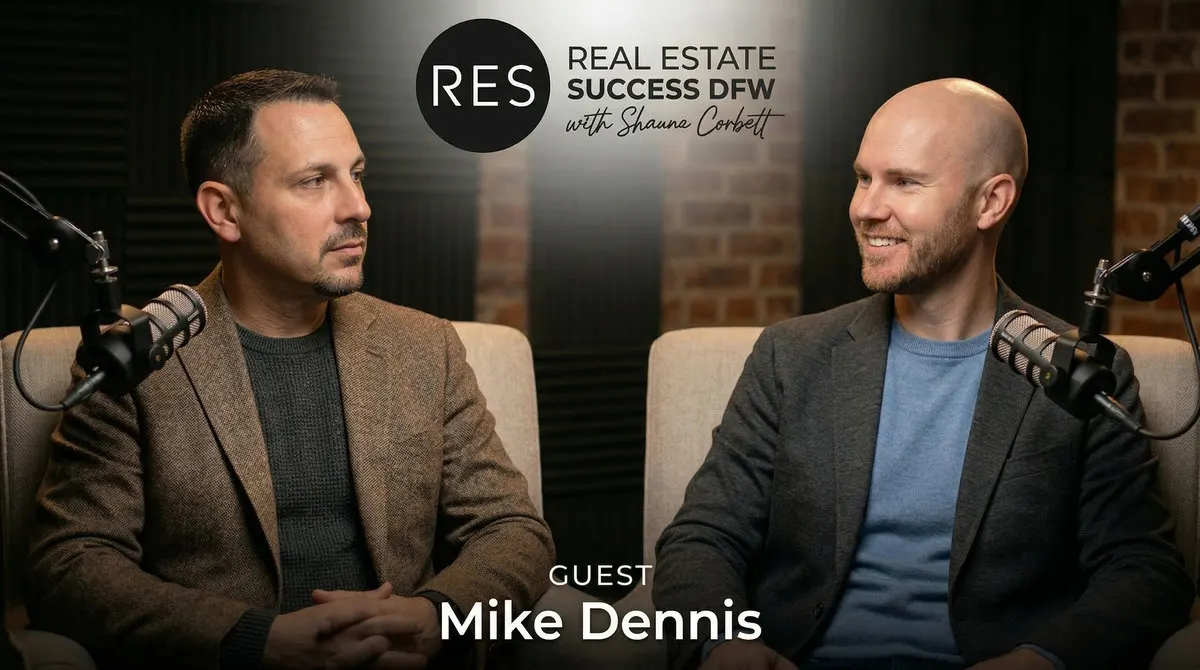
Mike Dennis lost $30,000 because he forgot to call someone back. The longer version involves a lead he met at an open house, a three-month gap where he got too busy to follow up, and the gut punch of watching her buy a home down the street from him with a different agent.
When Mike joined me on Real Estate Success DFW, we got into the CRM strategies, mindset shifts, and production habits that turned that loss into a system managing over 2,000 contacts.
Mike has closed more than 200 transactions in under ten years, branching into land development, commercial deals, and even RV parks while keeping his weekly hours around 20. His first deal paid him $1,500 on a $6.5 million listing, an experience that would’ve chased most people out of the business entirely. The strategies he shared are the ones I’d hand to any agent who feels like they’re grinding hard but watching deals fall through the cracks.
A few of the best moments from this conversation stand on their own. Watch the highlights below.
The full conversation covers everything from Mike’s $1,500 origin story to the CRM system that now keeps over 2,000 leads warm on autopilot. The entire episode is right here.
Honest conversations with working producers are the backbone of what we’re building at Real Estate Success DFW. Join the growing community of DFW agents and follow along on Facebook, Instagram, and LinkedIn for more conversations like this one.
Connect with Mike directly through his Facebook page.
Why This Conversation Hit Every Agent Where It Hurts
I’ve closed over 500 homes, and I still picked up actionable ideas from this episode. Most agents are inconsistent. They grind for a month, coast for two, then wonder why their pipeline evaporates.
Mike sells 20 to 30 homes a year at $12 to $14 million in volume while working around 20 hours a week, and his real estate production strategies prove that systems outperform raw effort every time. It’s the kind of conversation this platform was built for.
Before we dig into Mike’s story, a quick thank-you to the partners behind this episode.
- Financing kills more deals than bad negotiations. I send my clients to Brooke and Todd Johannes at Cherry Creek Mortgage because they match the right loan and close on time.
- Title problems stall closings fast. Elle Daniels at Texas Excel Title keeps my transactions clean and on schedule.
- A weak inspection puts your buyer at risk. Ken Earp is the inspector I trust because his reports are thorough and his calls are honest.
- Most agents leave insurance referral income on the table. Scott Prendergast at PRISM Insurance Partners handles the process and pays you for the referral.
Mike Dennis’ Origin Story: The $1,500 Lesson That Changed Everything

Mike was working in remodeling sales and restaurants, paying for school out of pocket, when a musician friend showed him a $5,700 commission check. That check represented two months’ income for Mike in 2015. He made the switch, worked as an unlicensed assistant for $250 a week, and ended up on a $6.5 million family farm listing as his first deal.
The lead agent doubled-sided the transaction and collected nearly $600,000. Mike had been working for months and expected around $8,000 to $10,000. What he got was a hard lesson.
“When he finally called me over to give me my cut, the check was for $1,500. That was my introduction to real estate. It was the beginning of the end of our partnership, but I’m still thankful he opened my eyes to the industry’s potential.”
“The first lesson I learned was: always get it in writing. He kept saying, ‘I’ll take care of you,’ but that doesn’t mean much without a contract.”
That experience shaped everything Mike does now, from how he structures agreements to how he protects his time.
Scarcity vs Abundance Mindset in Real Estate
The tension between abundance and scarcity came up early in our conversation. Mike spent eight years at Keller Williams learning that collaboration beats protection, and he carries that abundance mindset into every negotiation.
Key Principles:
- Give up a piece of commission to save a deal when negotiations stall
- View one transaction as the doorway to five more
- Treat other agents as potential referral partners, not competitors
Mike told me he’s been in situations where a $5,000 repair was holding up a $50,000 commission. He’d rather absorb the cost, net $25,000, and move on. Agents who operate from scarcity let minor disputes kill entire deals and rarely see the opportunity cost of what they lost.
Why Most Agents Lose Deals (And Don’t Even Realize It)
Mike’s $30,000 missed opportunity is the clearest illustration of how deals vanish. He met a motivated lead at an open house, got busy with other showings, and never followed up. Three months later, she’d sold her house and bought a new one with a different agent.
The data backs this up. 44% of agents give up after just one follow-up attempt, and leads who receive six or more contact attempts convert at dramatically higher rates. Those leads are being abandoned.
The CRM Wake-Up Call That Changed Everything
After losing that deal, Mike committed to building a real estate follow-up system around a CRM. He went from relying on memory and scattered text threads to having a structured database with auto-reminders for every contact.
“Early on, I met a lead at an open house but forgot to follow up because I was ‘too busy’ showing other homes. Three months later, I saw that she had sold her house and bought a new one just down the street from me. That was $30,000 in commission I squandered because I didn’t stay in front of a prospect. After that, I got a CRM. Now I have over 2,000 people in my database with auto-reminders. You can’t rely on memory or text threads once you move past 25 people.”
I didn’t use a CRM for most of my career either. I worked strictly by sphere of influence and eventually realized people I’d known for years were hiring other agents because I wasn’t staying visible. That same pain is behind every strategy Mike shared. The wake-up call hits differently when it’s your money walking out the door.
Your CRM Is the “Microwave” for Your Leads
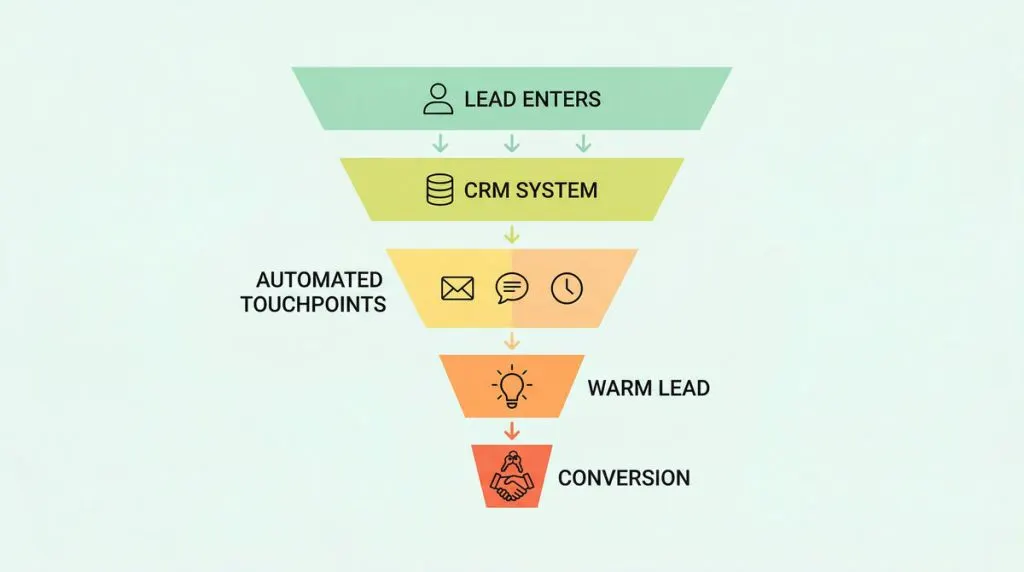
Mike has an analogy that stuck with me. A lead is like food in the microwave: pull it out and set it on the counter, and it gets cold. A CRM keeps that lead warm through automated drip campaigns, reminders, and scheduled touchpoints until they’re ready to buy.
The numbers reinforce this. 88% of real estate agent conversations never make it into a CRM. Leads go cold because nobody logs the conversation in the first place.
The 3 Core Production Strategies That Actually Work
Mike and I identified three production strategies that drive consistent results without a massive ad budget. We break down approaches like these regularly on the Real Estate Success DFW blog.
<table class=“has-fixed-layout”><tbody><tr><td><strong>Strategy</strong></td><td><strong>Cost</strong></td><td><strong>Key Advantage</strong></td></tr><tr><td><strong>Open Houses</strong></td><td>Free</td><td>Direct access to warm, motivated buyers</td></tr><tr><td><strong>CRM Follow-Up Systems</strong></td><td>Low (software subscription)</td><td>Automated contact management for 2,000+ leads</td></tr><tr><td><strong>Daily Lead Generation</strong></td><td>Free</td><td>Builds pipeline through everyday conversations</td></tr></tbody></table>
These strategies demand discipline and consistency, which is why most agents skip them and wonder where their deals went.
Open Houses: The Most Underrated Lead Generation Tool
Open houses were the backbone of Mike’s early career, and he turned them into a lead generation engine. He treated every one as a stage to demonstrate competence and deep market knowledge. His edge was preparation: knowing the surrounding inventory cold before anyone walked through the door.
“Open houses were the first free tool available to me. They brought in ‘warm bodies’ who were already interested in real estate. My job was to show competence. If a house wasn’t right for them, I already had the inventory of the surrounding area memorized so I could recommend something else. I studied MLS inventory like it was a degree.”
Action Steps:
- Study every active listing, expired listing, and price history in the surrounding area
- Offer alternative properties immediately when the current one isn’t the right fit
- Treat every visitor as a potential long-term client
Nearly half of all buyers attend an open house during their search. The agents who show up prepared walk away with new business, and the rest sit behind a sign-in sheet wondering why nobody called.
Why Reading and Market Knowledge Create Instant Credibility
Mike’s approach to preparation sets him apart from agents who wing it. He studies inventory like it’s coursework, and that depth of knowledge translates directly into client confidence.
“Reading and comprehension really should be the prerequisite. Too often, agents don’t have answers to basic questions because they aren’t following the contract.”
“I comb through every listing, every expired, and every price history in a city. It allows me to have the inventory in my mind whenever I’m talking to someone. That’s how I got to a production level of $12 to $14 million a year while only working 20 hours a week.”
When you can answer any question about the market without reaching for your phone, people trust you faster and close with you sooner.
Why You Won’t Get Rich Selling to Friends and Family
I learned this one personally. I worked strictly by sphere of influence for years and eventually realized people I’d known forever were using other agents. Familiarity doesn’t guarantee that someone thinks of you when they’re ready to buy or sell. Comfortable and top of mind are two very different things.
Mike ran into the same wall. The agents who stay in front of their entire database are the ones who scale past 30 or 50 transactions a year. Sphere alone caps out quickly, and the ceiling is lower than most agents want to admit.
The Power of Consistent Follow-Up (Even Years Later)
Mike has contacts who reach out after six years of no direct conversation. His CRM kept sending automated touches the entire time, and when those people were finally ready to move, he was the name in front of them.
That kind of long-game persistence is where a good CRM delivers its biggest return. The leads you meet today might not make a move for five to eight years, and without a system keeping you visible, they’ll hire whoever shows up when they’re ready.
How to Use a CRM the Right Way
Everything Mike shared about his CRM comes down to one principle: make every outreach feel personal and intentional.
Daily Habits:
- Log every call, text, and meeting immediately after it happens
- Set reminders for follow-up on a regular cadence
- Track personal details: kids’ names, hobbies, upcoming life events
- Use notes to reference past conversations in every new touchpoint
Mike’s approach to phone calls shows why these habits matter:
“It’s a judgment call. If we just had a text exchange, I might not call. But if someone hasn’t responded in a long time, I’ll call them. I keep detailed notes so I can tie the conversation to something personal, like asking how their kid’s college is going or how a home remodel turned out. It makes the call relatable rather than a cold sales pitch.”
The Role of Niches vs Opportunity in Real Estate
I believe agents should hyper-focus on a niche. If you’re a Marine, market to Marines. If you specialize in luxury finishes, own that lane. Mike takes a broader approach: he follows any real estate opportunity until the door is locked, from residential to commercial to RV parks.
Living in a metroplex of 8 million people, his argument is that opportunity is everywhere if you’re paying attention. He’s picked up listing leads in the checkout line at the grocery store. Both approaches work, but only if you commit and show up every day.
Becoming a Connector: The Hidden Superpower
I use group texts to connect clients with contractors, lenders, and other agents. It creates immediate accountability: when you introduce two people in the same thread, both remember who made the connection happen.
Mike does this constantly. His networking creates referral loops: he connects a buyer with an inspector, the inspector sends a seller his way, and the cycle keeps feeding itself. Agents who become known as connectors build a reputation that generates business without a single cold call.
Frequently Asked Questions
What is the best CRM for real estate agents?
Mike uses a platform called Real Vol, which he chose for its marketing customization and campaign-building tools. The best CRM is whichever one you’ll actually use daily. Features matter less than the habit of logging every interaction and setting follow-up reminders without exception.
How often should agents follow up with leads?
Consistent, ongoing follow-up is the standard Mike sets. His CRM sends automated touches that keep him in front of leads for years. Pair automation with personal calls and texts timed around life events or previous conversations to keep the outreach feeling human.
Are open houses still effective?
Mike built his early production almost entirely on open houses. They provide direct access to motivated buyers, cost nothing to host, and give agents a chance to demonstrate market expertise in real time. The differentiator is preparation: know the inventory before anyone shows up.
Why do agents lose deals?
Lack of follow-up is the primary cause. Mike lost a $30,000 commission because he didn’t call someone back. The majority of agents give up after one attempt, and those without a follow-up system in place lose leads to agents who stay consistent. That’s exactly what Mike’s approach solves: automate the touches, log the details, and stay in front of every lead until they’re ready.
Never miss an episode
Subscribe to Real Estate Success DFW on your favorite app. Have a story or strategy other agents should hear? Apply to be a guest.
More episodes
Why Kevin Yoder of Infinite U and Yoder Real Estate Stopped Recruiting and Built a More Profitable Team
Why did Kevin Yoder of Infinite U and Yoder Real Estate stop recruiting? Learn how SOPs, AI, and sharper sales skills beat more leads and bigger teams.

The Brokerage Myth I Unpacked With Devin Dubuc of Mortgage Coaching on Loan Officer Success Live
A better split won't fix a slow pipeline. Get the review and follow-up systems shared on Loan Officer Success Live with Devin Dubuc Mortgage Coaching.

What Geoff Cavender of The Cavender Team Knows About Leads That Most Agents Miss
Paid leads rarely fail on their own. Geoff Cavender of The Cavender Team shares the follow-up system and delegation plan behind 450 deals. Learn how.