
Jennifer Gale of Gale Group Realty Says Quitting Too Soon Is Costing You Everything
By Shaune Corbett·

Most agents don’t fail because their strategy is wrong. They fail because they quit right before it starts working. That is the exact pattern Jennifer Gale of Gale Group Realty unpacks in this conversation, and it is how her brokerage grew from 19 agents to more than 70 in under two years.
On this episode of Real Estate Success DFW, I get into the systems, the mindset shifts, and the one phone call that turned into a seven-million-dollar deal.
Curious about this episode? Here’s a quick preview of our conversation before you dive into the full breakdown below.
The Real Reason Most Agents Never See Their Strategy Pay Off
Here’s what I keep running into on this show. Agents try something for a week. Nobody answers the phone. They call it broken and move on. Jennifer Gale of Gale Group Realty told me the same thing happens with open houses, sphere calls, even entire marketing plans. Something starts working, then the agent stops doing it, right when it was finally paying off.
The data backs up how common this is. Coach Tom Ferry cites NAR figures showing that roughly 75 percent of new agents fail within their first year, and 87 percent are gone within five. That’s not a talent problem. It’s a reps problem. Jennifer put it simply: for every success, there are a hundred calls, five answers, and one conversion. Most agents quit before they ever get to see that math play out.
Watch the full conversation here:
I’ve built my own version of that lesson into how I run my business. When I stopped trusting the MLS as my only source of truth, it wasn’t because the MLS is useless. It’s because relying on one tool for too long, without building your own systems around it, is exactly the kind of complacency Jennifer is talking about. And if this episode gets you fired up, our own community is a good place to keep the conversation going in our private Facebook group for agents.
How Jennifer Gale Turned a Five-Person Team Into a 70-Agent Brokerage
Jennifer didn’t start with a plan to build a brokerage. She started as a team of five in a market with barely a hundred working agents total. Small town, small thinking, she told me. So she started studying people doing bigger things, mostly in the States, and asked why not us.
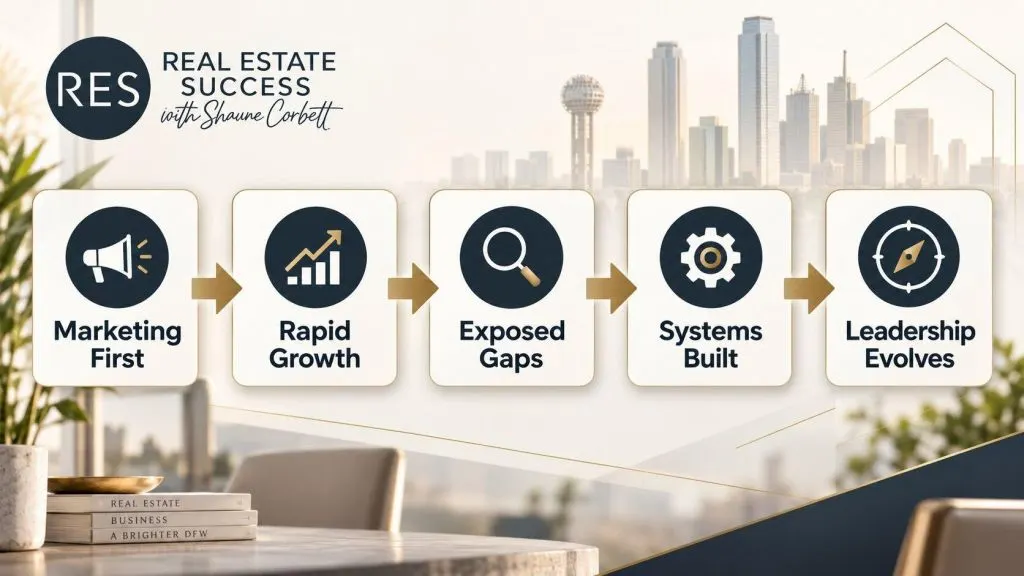
Here’s the part most people skip. Gale Group Realty Brokerage grew backward from how the textbooks say it should. Jennifer went all in on marketing before she had any systems or standards in place. It worked: agents came, and then those agents exposed every gap in her leadership. That forced her to build the systems after the fact instead of before. She told me recruiting a brokerage is the same skill as recruiting buyers and sellers. It’s about cadence, message, and follow-up, just pointed at a different audience.
She also runs an “each one teach one” culture inside the brokerage, pulling in her most successful agents as contributors rather than treating herself as the only source of answers. That single decision is a big part of why her real estate team growth strategies actually held together once the team passed 50 agents, a point where most brokerages start cracking. You can read more about how her team is built on her Gale Group Realty bio page or meet the full Jennifer Gale team directly.
I’ve seen this same growth curve play out closer to home too, in a brokerage growth story built the same backward way. The marketing and momentum came first, and the systems had to be built afterward just to keep up.
The Complacency Cycle That Quietly Kills Momentum
This is the part of our conversation that stuck with me the most. Jennifer described a life cycle every agent goes through. You start with blind faith. You get some proof it’s working. Then you take your foot off the gas.
“I just think that, you know, complacency, when we go, obviously you start and it’s like that life cycle of the goal. You have optimism, and you’re going at it full force. It’s blind faith. And then you get some proof that it works, and we take our foot off the gas. There are agents that like, oh yeah, I don’t call, I would never call people. Well, that’s our job, is to call people all day, every day. It’s to talk to people. And I think that complacency comes in, and that’s why you see that life cycle go through. Agents, a lot of them are in like a washing machine tumbling, right? We’re going up, down, up, down, and they have to start from zero every time they let that happen.”
That washing machine image is dead accurate. The science backs it up too. Habit formation research from University College London found it takes an average of 66 days, not the popular 21, for a new behavior to become automatic. Stop before that point, and you’re not just pausing; you’re resetting the clock to zero. That’s the real cost of inconsistent effort.
Real consistency in real estate marketing isn’t about intensity. It’s about not stopping at day 40 when day 66 is where things click. I talk through this same idea in my own writing on LinkedIn, where I break down what a repeatable weekly cadence actually looks like for agents who are tired of starting over.
Why Your Marketing Should Sell Their Story, Not Your Awards
Here’s a stat that stopped me mid-sentence during this conversation. Jennifer pointed out that roughly 80 percent of the clients she works with right now are in some kind of hard financial spot, not popping champagne after a fun purchase.
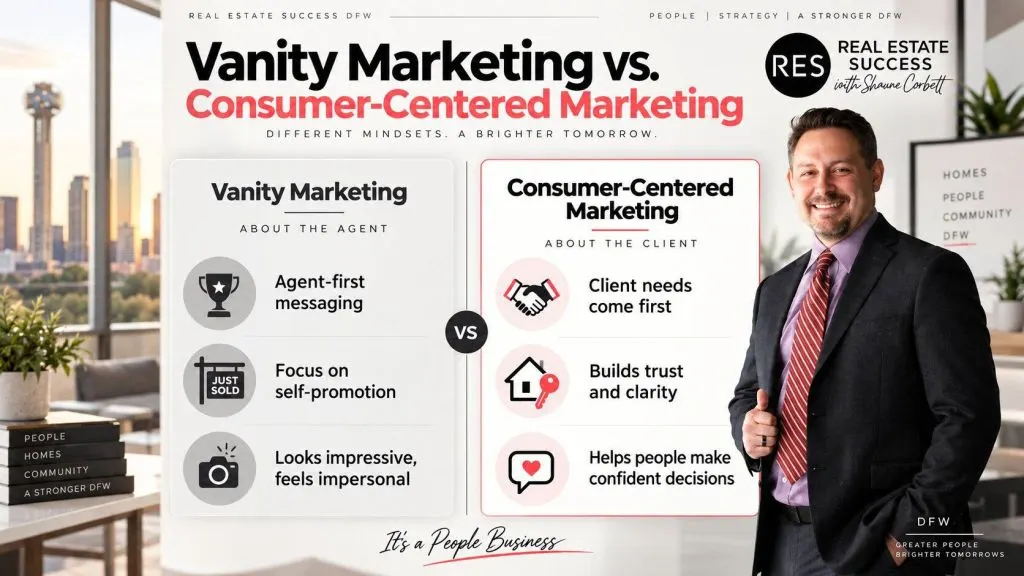
Posting a “just sold” graphic doesn’t build chemistry with anyone. What builds it, Jennifer said, is telling the real story of a person you helped through a hard season. That is how she gets engagement on her own Facebook page, by showing the human side of a transaction instead of the highlight reel.
The same principle showed up in a conversation I had about ditching the luxury pretense in favor of talking to real people. Jennifer added one more layer to it. A newer agent who shows up consistently and visibly will out-earn a veteran who’s gone quiet, no matter how many years that veteran has in the business. She’s built her own visibility partly through channels like Instagram, where staying seen has replaced the old idea that word of mouth alone is enough.
The Simple Habit That Keeps You Top of Mind for Years
Jennifer told a story about a friend she called just to say hello, mentioning almost as an afterthought that she was in real estate and looking for referrals. That single call turned into a seven million dollar deal, the first call she made that day.
“You have to have systems in place and take care of your past clients with all the love, because that’s obviously our best business. But you have to continue marketing. You have to continue showing up for them. You have to reach out to them quarterly, and not ask them about real estate, but ask about their kids. Ask how the house is. Did you put in the pool? What’s happening with you? What do you think about the world? You know, just talk to them as humans, because again, your days will fill up.”
The numbers make her point for her. According to NAR’s Profile of Home Buyers and Sellers, a large share of both buyers and sellers work with an agent they’ve used before or one they were personally referred to. A strong past client follow-up strategy isn’t a nice extra. It’s where most of the repeat business in this industry actually comes from.
Jennifer runs her own version of this through what she calls the Simple Sphere System, four touches a year by text, plus phone calls that don’t even mention real estate directly. Her team’s client reviews and accolades reflect exactly the kind of long-term trust that this quiet, consistent follow-up builds over years, not months.
Why AI Will Handle More of the Job, But Not the Finish Line
We spent real time on this, because Jennifer isn’t shy about where she thinks the industry is headed. She sees AI handling the repetitive parts of the job, showings, scheduling, lead qualification, and doing them better than most agents can.
“I think now, moving more than ever as we move into the AI space and automations and all of those things, the value, the old school really should be the new school, because people are going to want to know that it’s you. They’re going to want to know that you’re real. They’re going to want to know what your value proposition is. People will be turned off from all of that. People will automate themselves out of business.”
Her analogy about stock trading nailed it for me. Floor traders in the eighties handwrote every ticket and closed maybe fifty trades a day. Today’s traders close thousands, at a smaller margin per trade. Jennifer thinks real estate is headed the same direction: more transactions, smaller take per deal, with AI in real estate business absorbing the manual grind. This tracks with what’s happening industry-wide right now. Inman reported that by the end of 2026, roughly 80 percent of top producers will operate entirely within AI-integrated systems. That shift is already underway.

I’ve seen agents in my own network apply this well, automating the follow-up grind so the software chases leads while the agent stays free for the conversations that actually close deals.If any of this resonates, come find me on Instagram, I post a lot of these breakdowns there between episodes.
Want to hear my entire conversation with Jennifer Gale of Gale Group Realty, where she breaks down how she grew her brokerage from 19 to 70 agents by staying consistent with the strategies that already worked? Listen to our podcast episode.
FAQ Section
Why do real estate agents quit strategies that are already working?
Jennifer explained that most agents expect instant results, and when the results don’t show up fast enough, they stop before they’ve put in enough reps. The moment business gets busy, the daily habits that created the momentum are often the first thing to go.
What should real estate agents post on social media to attract more clients?
Instead of leading with awards, open houses, or “just sold” posts, Jennifer recommends telling stories about real clients and the problems you helped them solve. Content should add value to someone else’s life, not function as a personal highlight reel.
How can real estate agents use AI without losing the human connection?
AI and automation can take over repetitive tasks like scheduling, lead qualification, and even property showings. That frees agents up to focus on negotiation, strategy, and the emotional, human parts of a transaction that AI can’t replicate.
Apply As A Guest on Real Estate Success DFW
Jennifer built a brokerage that grew fast because she refused to quit on what was already working, and she stayed close enough to her own past clients and agents that trust never had a chance to fade. That combination, consistency plus real relationships, is exactly what this podcast exists to highlight.
If you’re working in this industry with a story like Jennifer Gale of Gale Group Realty‘s, whether in brokerage, coaching, marketing, or team-building, I want to hear it.
Never miss an episode
Subscribe to Real Estate Success DFW on your favorite app. Have a story or strategy other agents should hear? Apply to be a guest.
More episodes
Why Kevin Yoder of Infinite U and Yoder Real Estate Stopped Recruiting and Built a More Profitable Team
Why did Kevin Yoder of Infinite U and Yoder Real Estate stop recruiting? Learn how SOPs, AI, and sharper sales skills beat more leads and bigger teams.

The Brokerage Myth I Unpacked With Devin Dubuc of Mortgage Coaching on Loan Officer Success Live
A better split won't fix a slow pipeline. Get the review and follow-up systems shared on Loan Officer Success Live with Devin Dubuc Mortgage Coaching.

What Geoff Cavender of The Cavender Team Knows About Leads That Most Agents Miss
Paid leads rarely fail on their own. Geoff Cavender of The Cavender Team shares the follow-up system and delegation plan behind 450 deals. Learn how.