
Real Estate Success DFW Podcast: AI, Partnerships, and Strategies for Real Estate Agents
By Shaune Corbett·
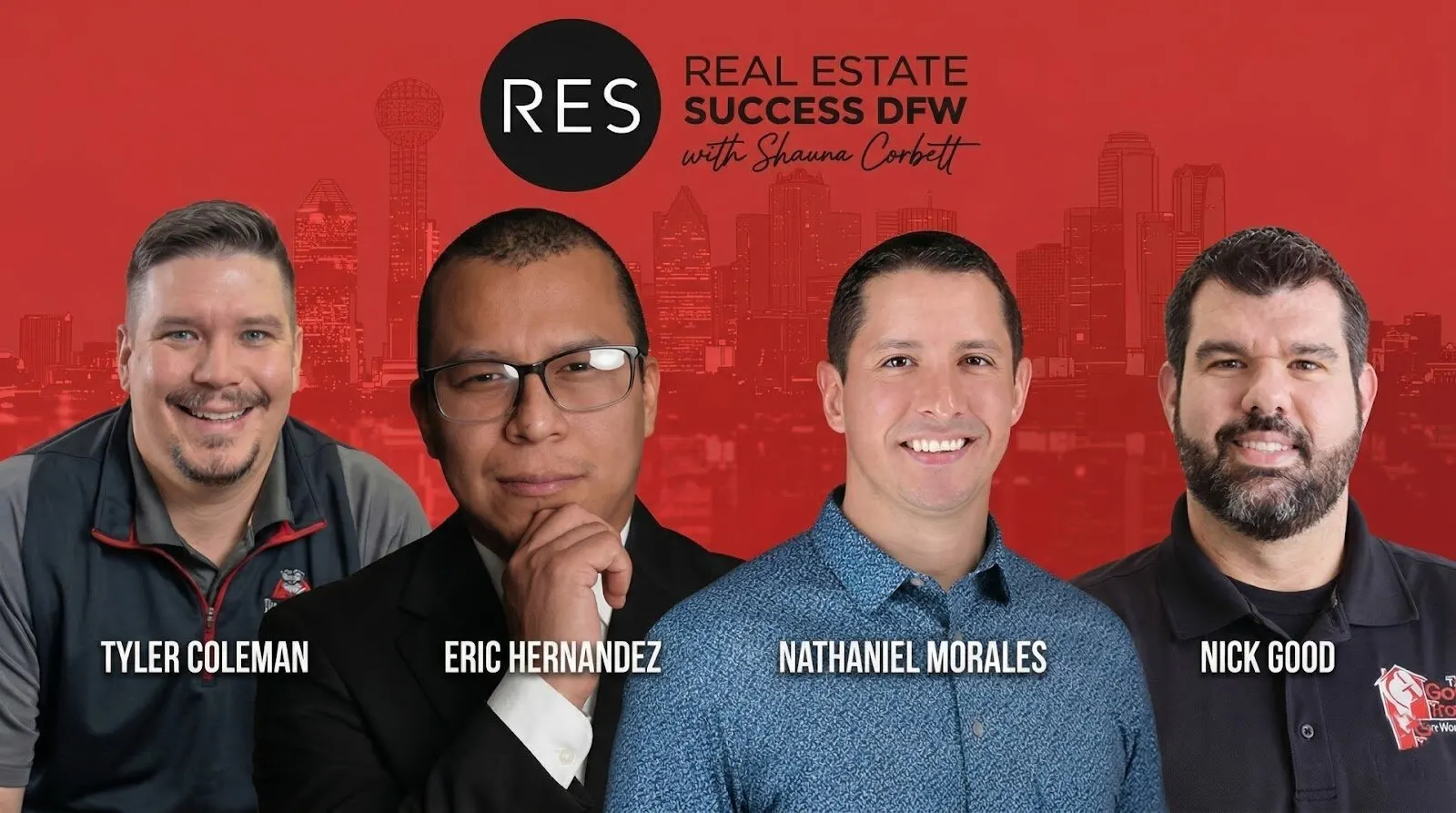
We were sitting at Cigars International in The Colony, about four months into a men’s meetup I’ve been running for local agents, when Nick Good dropped a line that reframed how I think about technology in this business: “We’re not being AI replaced, we’re being AI enhanced.” That conversation, along with three others I had that evening, became one of the most practical episodes I’ve recorded for the Real Estate Success DFW podcast. The real estate strategies we covered ranged from AI-powered lead qualification to how a five-month-old agent landed four listings by telling every person he met what he does for a living.
This episode brought together four people working the DFW market from completely different angles:
- Nick Good of Good Real Estate: Runs property management, renovations, and a high-volume team.
- Tyler Coleman: Specializes in agent-focused moving services and has become a go-to referral partner for DFW realtors.
- Nathaniel Morales: Grew a fast-scaling DFW brokerage from scratch to four physical offices in just over four years.
- Eric Martinez Hernandez: A former Marine turned brand-new real estate agent who is stacking listings through pure persistence.
Hit play on this clip from this conversation before diving into the full breakdown.
For the full conversation, from AI automation to a rookie’s door-knocking playbook, the whole episode is right here.
These are the kind of professionals we build Real Estate Success DFW around, and they’re worth keeping up with:
- Nick Good: Instagram
- Tyler Coleman: Instagram
- Nathaniel Morales: Instagram
- Eric Martinez Hernandez: Instagram
Introduction: Real Estate Success in a Changing Industry
This episode covered a lot of ground. AI is handling tasks that used to require full-time hires, and efficiency gains in the sector are projected to reach tens of billions in the coming years. Commission structures are shifting. Brokerages are rethinking how they onboard new agents. And rookies like Eric Martinez Hernandez are proving that old-school hustle still works when paired with the right mentorship.
These themes don’t exist in isolation. The agent using AI to qualify leads is the same agent who needs a reliable moving company to recommend at closing, and the same agent who needed a broker willing to pick up the phone at 7:00 PM when their first showing went sideways. That thread runs through this episode and through every successful career in this market.
How AI Is Enhancing Real Estate Agents
Nick Good has been using AI inside his businesses for a while now, and his take on the broader conversation happening in real estate is measured and practical.
Nick framed it during our conversation:
“We’re not being AI replaced, we’re being AI enhanced. It’s like peptides, a big thing right now, where our bodies are enhanced to be healthier, put on muscle, and lose weight. It’s the same thing. As long as you’re understanding and utilizing AI the right way, it’s going to help make you more efficient.”
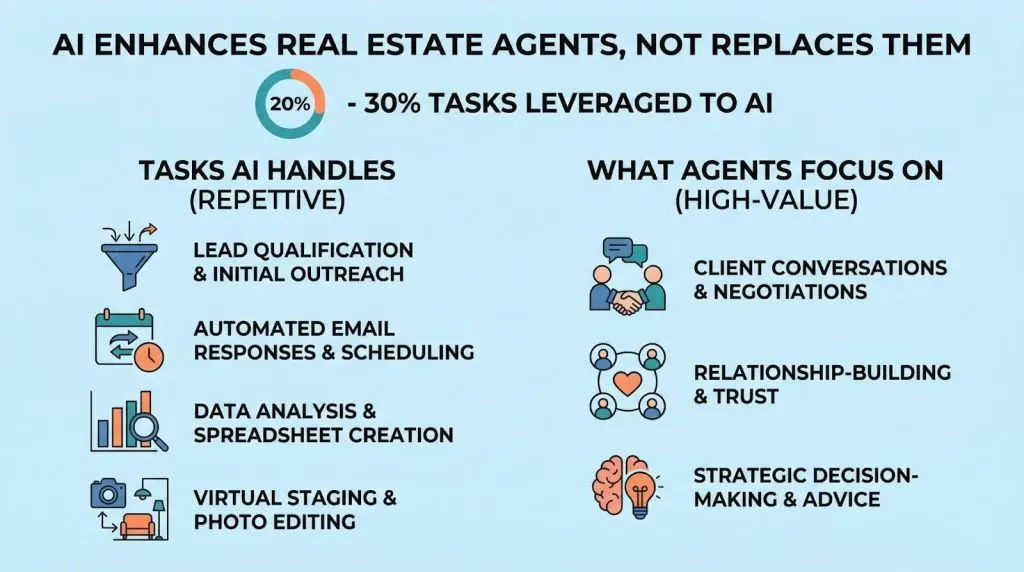
“I was listening to the All-In Podcast, one of the top-rated technology and business shows, and they discussed a study about people incorporating AI into their work. Currently, they are actually doing more work because about 20% to 30% of tasks are being leveraged to AI. This frees up the human to do higher-level engagement and higher-level work. It takes off the boring stuff, like building spreadsheets or responding to repetitive email chains.”
What stood out to me is that agents incorporating AI aren’t doing less work. They’re doing different work, and recent industry analysis supports that shift. The repetitive tasks disappear, and what remains is the high-value stuff: conversations, negotiations, and relationship-building that actually generate referrals.
Nick also told me about an AI agent named Jeff inside his property management company, Homeward Property Management. Jeff reaches out to agents, sets up meetings, and never calls in sick or takes a vacation. That automation saves his team an estimated 15 to 20 hours a week.
Where AI is making the biggest difference for agents right now:
- Lead qualification and initial outreach
- Automated email responses and scheduling
- Spreadsheet creation and data analysis
- Virtual staging and photo editing for listings
The Opportunistic Real Estate Agent Strategy
Nick teaches a framework he calls the “Opportunistic Real Estate Agent,” and the premise is straightforward. When you talk to a homeowner, you shouldn’t be thinking about just one outcome. He walks agents through eight steps to evaluate whether they should list the property traditionally, buy it themselves for their rental portfolio, or wholesale it to investor clients.
Most agents hear a homeowner say the property needs work and they walk away. Nick’s mindset is the opposite: “You have off-market people and investors. There are steps we can take to solve real estate problems.” That turns a dead lead into a deal. He also runs a Facebook group called DFW Realtors where he shares these strategies with agents who are building wealth beyond their next commission check.
Vendor Partnerships That Strengthen the Real Estate Experience
One of the biggest lessons I’ve learned is that top agents in DFW don’t operate alone. They build a network of trusted vendors they’ve vetted personally—people they can call when a deal hits a snag or a client needs help outside the transaction.
Tyler Coleman put it bluntly:
“A lot of agents don’t like referring moving companies because most of them suck. But you’re doing your clients a disservice by not having vetted partners. There are so many fly-by-night companies. If you aren’t setting them up with someone reputable, you’re letting them fend for themselves, which can mess up the deal.”
He’s right. When you have partners who pick up the phone and work through the problem with you, your client walks away believing you had their back. My own setup includes a network of sponsors and partners I trust with my clients.
Key Vendor Roles
<table class=“has-fixed-layout”><tbody><tr><td><strong>Vendor Type</strong></td><td><strong>Role in the Transaction</strong></td><td><strong>Why Agents Need One</strong></td></tr><tr><td><strong>Moving Company</strong></td><td>Handles client relocation logistics</td><td>Referral incentives, smoother closing experience</td></tr><tr><td><strong>Home Inspector</strong></td><td>Pre-listing and buyer inspections</td><td>Early problem detection, stronger negotiating position</td></tr><tr><td><strong>Insurance Agent</strong></td><td>Provides homeowner coverage quotes</td><td>Full PITI transparency before buyer commitment</td></tr><tr><td><strong>Mortgage Lender</strong></td><td>Handles qualification and financing</td><td>Pre-qualified leads, smoother closing timelines</td></tr></tbody></table>
How Moving Companies Support Real Estate Agents
Tyler Coleman’s role with Black Tie Moving is a textbook example of a real agent-vendor partnership.
“Black Tie Moving is about 13 years old. The owner was in the mortgage industry and had a really bad moving experience. He realized he could do it better and built the business on real estate referrals… Because realtors are our biggest base, I tell them I want to treat their client like they do. I give them my cell phone number and I am their point of contact from start to finish.”
What separates Tyler from most moving company reps is accessibility. He stays the single point of contact from estimate to delivery. When something goes wrong, you’re calling a person you know instead of sitting on hold with a call center.
Building Brokerages Through Mentorship and Systems
Nathaniel Morales built Local Realty Agency from the ground up. He didn’t get there by recruiting warm bodies and hoping for the best.
Nathaniel described his approach to onboarding:
“We have four brokers, each with their own office. It’s not just a team leader; it’s an actual broker and operations manager available for mentorship. I sit down with them for an assessment: What is your schedule? Do you work full-time or part-time? What is your motivation? If you don’t establish motivation, you have no baseline.”
What makes his model work is availability. When an agent calls at 7:00 PM with a showing problem, somebody picks up. That access is the reason his brokerage has grown through attraction, creating a community-driven support system.
A New Agent’s Perspective on Early Success
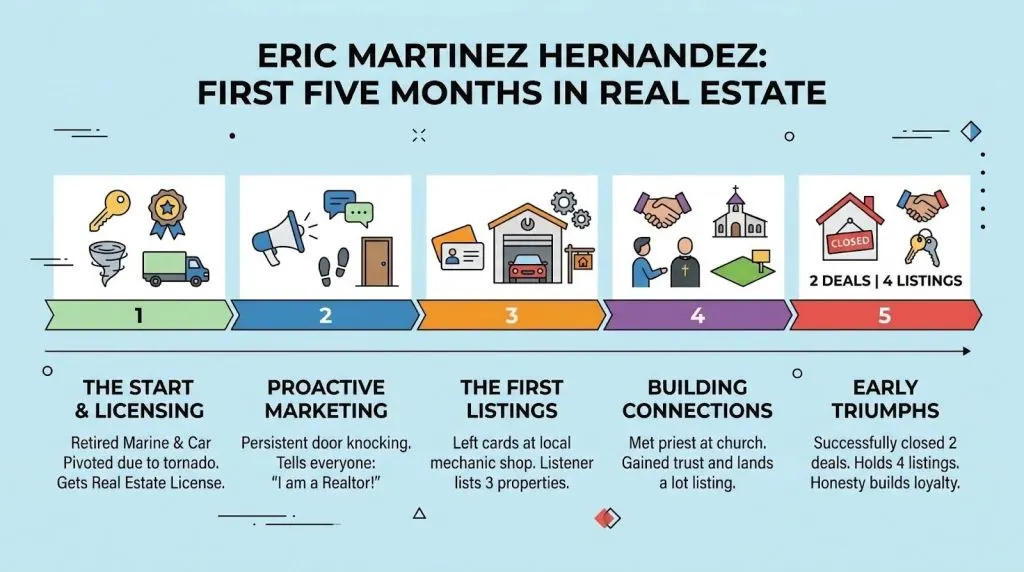
Eric Martinez Hernandez walked into real estate from a completely different world. As a retired Marine and former car hauler, he decided to get licensed after a tornado forced a career change. Five months in, Eric had closed two deals and held four listings.
“One day I was changing my oil and I asked the guy if I could leave my business cards. Another guy was sitting there listening… He called me back two weeks later to put three properties on sale.”
“Another client asked me to go to church with her. I met the priest and he asked what I did… Two days later he called to sell a lot. I just scream to the world that I’m a realtor. I’ve been knocking on doors; some people laugh, some tell me to get out, but I’m persistent.”
Eric’s first client was a fellow Marine moving from California who wouldn’t trust any other realtor. That loyalty comes from being honest, showing up, and doing what you said you’d do.
Key Advice for New Real Estate Agents
The Real Estate Success DFW podcast captures real estate strategies from practitioners like these. Here’s the core advice:
- Get a mentor before you need one. Find a broker who answers the phone, not one who just hands you a login.
- Work your existing network first. Those early deals with friends and family build your skills and first referral sources.
- Be honest, even when the news is bad. Eric’s advice: “Be 100 percent honest, even if it’s bad news, because that’s how they trust you.”
- Build vendor relationships early. Having pros on speed dial gives you answers when your client has questions you can’t handle alone.
- Watch your profit, not just your income. Nick pointed out that when commission structures shift, your margins stay intact if your costs are controlled.
Final Thoughts: The Future of Real Estate Success
The throughline of this episode is clear: Agents who build systems around technology, relationships, and mentorship are positioned to grow. Real estate in DFW is moving fast, and Real Estate Success DFW captures the strategies that are actually working on the ground.
Frequently Asked Questions
What is the Real Estate Success DFW podcast?
Hosted by Shaune Corbett, it features industry professionals sharing strategies for building successful real estate careers in the Dallas-Fort Worth market.
How is AI changing the real estate industry?
AI helps agents automate administrative tasks, qualify leads faster, and manage portfolios so they can focus on negotiations and client relationships.
Why are vendor partnerships important?
They provide trusted recommendations for services like moving and inspections. Solving client problems through partners builds long-term referral power.
What advice is given to new real estate agents?
Find a mentor, work your network, stay honest, and build vendor relationships early. Persistence matters more than scripts.
This podcast is produced by the Icons of Real Estate – #1 Real Estate Podcast Network
Never miss an episode
Subscribe to Real Estate Success DFW on your favorite app. Have a story or strategy other agents should hear? Apply to be a guest.
More episodes
Why Kevin Yoder of Infinite U and Yoder Real Estate Stopped Recruiting and Built a More Profitable Team
Why did Kevin Yoder of Infinite U and Yoder Real Estate stop recruiting? Learn how SOPs, AI, and sharper sales skills beat more leads and bigger teams.
The Brokerage Myth I Unpacked With Devin Dubuc of Mortgage Coaching on Loan Officer Success Live
A better split won't fix a slow pipeline. Get the review and follow-up systems shared on Loan Officer Success Live with Devin Dubuc Mortgage Coaching.

What Geoff Cavender of The Cavender Team Knows About Leads That Most Agents Miss
Paid leads rarely fail on their own. Geoff Cavender of The Cavender Team shares the follow-up system and delegation plan behind 450 deals. Learn how.